

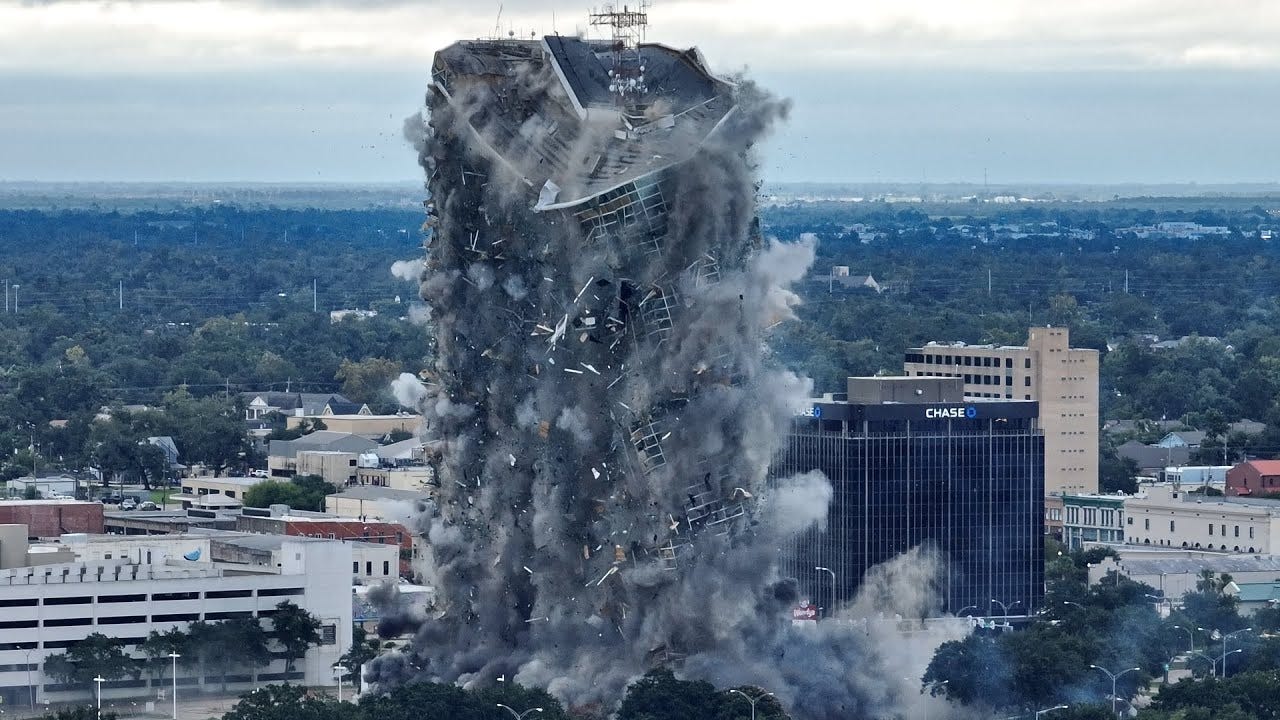
Something is taking out leaders. Not burnout. Not busyness. But something much deeper.
In my last piece, drawing on Simon Walker’s The Undefended Leader, I named the systems taking out leaders. In this article, we go further — into the mechanisms beneath the surface that quietly give rise to those systems. This is where it gets uncomfortable.
Most leaders intuitively understand the difference between their front stage and back stage. On the front stage, we are composed. Capable, measured, and clear. We preach, present, lead meetings, post online, cast vision, and manage conflict.
On the backstage, it is rather different.
We doubt. We second-guess and feel exposed. We replay conversations. We fear irrelevance and suffer imposter syndrome. We feel the sting of criticism. We wonder if we are enough.
Simon Walker, in The Undefended Leader, uses the front/backstage metaphor to describe how leaders defend themselves in a hostile world. Simon Walker didn’t stumble onto the front stage/back stage idea. It’s grounded in serious intellectual work — specifically Erving Goffman’s social theory on how human beings perform their way through social life.1 Walker takes that framework and applies it with care to the world of leadership. This isn’t a borrowed metaphor dressed up to sound clever. It’s a modality that has been rigorously tested and has earned its place in the real world.
What it shows us is not flattering.
If we are honest, so much of what we call leadership today is really a sophisticated form of performance and image management. We curate competence. We protect reputation. We manage perception with care and precision. We work hard to ensure that what is visible publicly is strong, coherent, decisive, and high-impact. We learn how to speak with clarity even when we feel uncertain. We project steadiness even when we are stretched thin. The front stage must hold firm against a hostile world.
Meanwhile, backstage can feel very different.
Things are not always as secure as they appear. We are often running on adrenaline and calling it resilience. Self-doubt lingers in the background, even when affirmation comes to us. There is anger and disappointment that we quietly spiritualise. There is grief too — grief for what leadership was meant to be, grief for what it has actually cost, grief for versions of ourselves that seem to have slipped away somewhere in the passing of time and our past.
We carry unmet expectations like splinters under the skin—a thousand paper cuts. Some are ours. Some belong to others but lodge themselves in us, turning septic. We feel the pressure to be visionary and pastoral, strategic and available, decisive and endlessly patient. And there is rarely a place to hold the complexity of what this does to us internally.
The front stage does not readily accommodate fragility. It has no obvious category for confusion, fatigue, or quiet resentment. So we carry it, normalise it, telling ourselves this is simply the weight of responsibility, and a season that will pass—until it doesn’t.
Underneath all of it sits a quiet fear that the gap between who we seem to be and who we actually are is widening. Not because we are fraudulent, but because we are so very tired. Because we are human. Because the cost of maintaining the performance slowly erodes our soul. And there is always that subtle anxiety that one day the gap will be exposed — that someone will see behind the curtain and realise how much effort it has taken to hold everything together.
And we have all watched what happens when the backstage is exposed.
I don’t just mean the truly egregious cases — the abusive, manipulative, predatory leaders whose behaviour is indefensible and must be named plainly. I mean the more tragic ones. The leader who is just overwhelmed. The one carrying unprocessed grief. The one running too long on adrenaline and too little on rest. The one whose exhaustion clouds judgment. Not evil or monstrous. Just depleted and running on empty.
When their backstage becomes visible, the response is often swift. They are removed, transitioned, and sidelined. Sometimes gently. Sometimes brutally. But often with a certain institutional efficiency. The system protects itself as the platform stabilises and the narrative is managed.
And the rest of us watch.
We may not say it out loud, but we absorb the lesson: do not let them see backstage. Don’t let the fatigue show. Don’t admit to confusion. Don’t reveal how close you are to the edge. Keep the front stage polished and keep performing.
So we double down on preservation. We manage ourselves even more tightly. We protect perception with greater vigilance. We convince ourselves this is wisdom, just until this season—which is never-ending—has passed.
Even when we are in environments that are, objectively, safe — where there are trusted friends, wise supervisors, spiritual directors, and overseers who would likely respond with grace — we often cannot see that it is safe. The internal narrative is louder than the external reality. The fear of losing credibility, influence, or trust distorts our vision. So we stay silent.
And then we wait too long.
We tell ourselves we need one more period, one more season, one more event, one more crisis navigated. We struggle on. We push through. We defer the conversations that might actually save us. By the time we finally name what’s happening backstage, the strain has already compounded. Boundaries have been crossed and the real options open to us have narrowed.
The energy that once went into vocation slowly diverts into concealment. The fear of exposure becomes a quiet hum in the background. We grow more isolated, more defended, less porous. And in trying not to become the “tragic” leader who unravels publicly, we edge toward a different precipice.
Because it is precisely this prolonged hiddenness — this refusal or inability to let our backstage be known, accompanied, and held — that has preceded so many of the catastrophic implosions we rightly fear. The worst explosions rarely begin with cartoonish villainy. They begin with isolation. With unmanaged grief and fatigue disguised as faithfulness. With a role that has grown larger than the human soul inhabiting it.
So in protecting ourselves from being discarded, we risk hardening ourselves instead.
Leaders do not collapse because they are human. They collapse because they try not to be for too long, and often alone.
The backstage leaks — through personality, defensiveness, overreaction, and control. And if it is not faced, it eventually explodes. Burnout, in this sense, is not simply overwork; it is the strain of sustaining a divided self. Suppression is not integration and is not a long-term survival strategy.
I spent years living with chronic anxiety. I thought that if I named how pressured I felt — how uncertain, how stretched — it would be the end of me as a leader. So I carried it privately. I became increasingly competent on the front stage and increasingly compressed backstage. Nothing dramatic happened. But the cost accumulated until I had a breakdown and was forced to start admitting the gap between my front and back stage.
Sociopathic Leaders

And these are the good leaders — the ones trying to carry something heavy with integrity. The ones who feel the strain of the front stage and know, at least vaguely, that there is a backstage that needs tending.
Some leaders are acutely aware of that tension. They know they are managing perception. They feel the gap between public strength and private fragility. Painful as that awareness is, it creates the possibility of confession, recalibration, and integration.
But there are others who do not even realise the dilemma they are inhabiting.
They have so internalised the role that the front stage no longer feels like a performance. It feels like their identity. Competence, clarity, decisiveness, spiritual authority — these have fused with their self. They are not consciously hiding backstage; they just cannot see it. Self-protection becomes instinctive and natural to them. Feedback feels like a threat because it is.
These leaders do not anxiously manage the gap between appearance and reality. It is merely unexamined. And unexamined gaps are the most dangerous of all.
But we must also speak about an entirely different category. The sociopath.
Some leaders relish the front stage. For them, performance is not exhausting; it is energising. They intuitively grasp power, narrative, and influence. They are adept at reading a room, shaping perception, and controlling optics. The front stage is not a burden to endure but a platform to master.
In such cases, there may be a backstage — but it is not a place of tension. It is simply completely private. There is no internal conflict about presenting one version publicly and inhabiting another privately. Concealment does not trouble their conscience; it is their natural identity strategy.
Research over the past two decades has increasingly observed that individuals with high levels of narcissistic and psychopathic traits — what organisational psychologists sometimes call the “dark triad” (narcissism, Machiavellianism, psychopathy) — are disproportionately represented in senior leadership roles, particularly in politics, finance, and high-pressure corporate environments. These individuals often display charm, boldness under pressure, high risk tolerance, and emotional detachment — traits that can look like resilience in turbulent contexts.
In unstable, crisis-driven cultures, such traits are often rewarded. When the world feels volatile, decisive dominance can be mistaken for strength. Emotional detachment can be misread as clarity. Moral flexibility can be reframed as a needed pragmatism. Studies have shown that such personalities often rise more quickly in competitive systems precisely because they are less encumbered by anxiety, empathy, or self-doubt.
And we are living in an increasingly turbulent world — politically polarised, economically unstable, and all digitally amplified. Systems under stress often select for those who can survive chaos without being internally destabilised by it.
But surviving turbulence and leading humanely through it are not the same thing.
The fatigued and divided leader needs accompaniment and integration.
The unaware but fused leader needs awakening and reflective formation.
But the sociopathic or highly narcissistic leader is not merely difficult; they are dangerous.
The danger lies not in charisma or unconventionality, but in the diminished internal restraints that ordinarily protect others — empathy, remorse, proportionality, the capacity to receive correction.
When those checks are weak or absent, harm is not accidental but deliberate. In parts of the Christian world, sociopathic leaders can thrive precisely because communities are often reluctant to set firm boundaries around visibly “anointed” or successful figures, mistaking accountability for disloyalty and charisma for character.
Without deliberate practices of reflection, supervision, spiritual direction, and courageous institutional oversight, leadership roles will almost always colonise the person. For some, this results in exhaustion and fragmentation. For others, it results in inflation and impunity.
By the time something cracks, it can feel sudden. But it rarely is. It is usually the long erosion of interior honesty — or the long absence of it. The tragedy is not only that leaders collapse. It is that systems sometimes reward the very traits that make collapse — moral, relational, institutional — more likely.
The invitation, then, is not to abandon leadership.
It is to cultivate leaders who are deeply human: self-aware, accountable, accompanied, and, where necessary, structurally constrained. In a turbulent age, that may be the most radical thing of all.
Why We Defend
Walker is not just psychologically on the money; he is pastorally on it too. He names what most leaders feel but rarely admit. Leadership is inherently evaluative. You are watched, assessed, interpreted. Everything about you is analysed. Decisions are scrutinised and your motives assigned.
Authority is always slightly fragile. Institutions — especially churches — are anxious systems: risk-averse, reputation-conscious, fearful of decline. Add in social media, and any protective membrane between the public and private has dissolved. The front-stage is now continuous, permanent, and algorithmically amplified.
So, of course, we defend.
We curate, we manage, and we clarify perceptions. We pre-empt criticism. In our current climate, not defending would almost be abnormal. It is, after all, how everyone survives.
But the Christian tradition has never been naïve about hiding. It traces concealment not to modern media, but to the Garden of Eden. And here we can extend Walker theologically.
“Adam and his wife hid themselves…”
The defended self did not begin with social media. It began with fear — the fear that exposure means rejection, that being seen means being cast out, that nakedness is no longer safe.
Front-stage and back-stage are not merely sociological and psychological categories. They are symptoms of ontological insecurity — insecurity at the level of being itself, brought into existence by the fall.
When identity rests on performance, competence, reputation, or approval, criticism feels like diminishment, failure like collapse, misunderstanding like erasure. We defend not simply to protect our image, but to protect our very existence. Without a deeper assurance that our identity is received rather than constructed and validated by others, exposure can feel like annihilation.
Defensiveness is rarely arrogance. It is fragility trying to prevent the collapse of the self.
The book of Genesis sees this clearly. Adam hides not because he failed a task, but because he is unsure of his standing. “I was afraid.” Shame here is not merely moral; it is ontological. Nakedness, once safe, now feels utterly dangerous.
Modern leadership intensifies this ancient condition that we all suffer from.
We construct a front stage because we are unsure whether we are held. We manage perceptions because we are unsure we belong. If I am what I perform, failure is a kind of extinction. If I am what others affirm, criticism is obliteration—literally.
And here Walker opens a door that theology must walk through to understand Christian leadership.
Christian faith does not offer thicker skin, better image management, or the development of unlimited resilience. It proclaims a prior holding — an identity given to us to claim, and not be achieved. A self that precedes success, survives failure, and cannot be erased by any misunderstanding.
If leaders are defending, the first question is not moral but is in fact metaphysical:
What, finally, holds them? What is actually holding leaders up inside — what are they really standing on?
Until that is answered, the front stage will stay crowded, the back stage guarded, and criticism will continue to feel like the death of self.
Participation Not Performance
The New Testament does not primarily invite leaders to become more authentic. It announces something far more destabilising.
“Your life is hidden with Christ in God.”
That is not advice, a skill, or a competency. It is ontology. Before Jesus performs a miracle, gathers a crowd, or enters conflict, he hears:
“You are my beloved Son.”
Identity precedes ministry. Belovedness precedes effectiveness.
If this is true, the split between front stage and back stage is not healed by improved self-disclosure. It is healed by participation. I’ll say that again:
The split between front stage and back stage is NOT healed by improved self-disclosure. It is healed by participation.
Participation means my being and identity are not self-generated. They are received. It is grounded in the Son’s relation to the Father. It is not constructed through approval, and criticism does not undo it.
Without this, undefendedness is merely bravery. With it, true undefendedness becomes possible; I am no longer defending a constructed self. I am living from one given by God.
Metabolising Pain

Leadership hurts. Let’s not romanticise or minimise it.
Christian leaders live in an age of accelerated complexity: institutional decline, polarised congregations, perpetual visibility, algorithmic outrage, drama triangles, identity politics that turn pastors into symbols and red meat for tribal battles.
Everything about a leader is scrutinised and judged. And in carrying all this, there is almost no backstage remaining. Even prayer can become performative.
So what happens when the pain from all this manifests?
If my identity depends on the front stage, pain must be managed, neutralised, or projected. Defensiveness is instinctive, and self-protection is necessary for survival.
But in participation with Christ, pain is not denied. It is metabolised.
The Cross is not an inspirational image of vulnerability. It is not a divine TED Talk about authenticity. It is the place where shame is absorbed into divine life. At Golgotha, humiliation is not curated or managed; it is entered into and transfigured. Christ does not control the narrative with a marketing plan. He entrusts himself to the Father — not as a coping strategy, but as ontological truth. The Father holds his being.
This is not theatre. It is participation.
And this is where Theosis — that ancient, neglected doctrine and experience — must be recovered. Theosis is not self-improvement or intensified spirituality. It is the slow reconstitution of the self in Christ. Through participation in his life, death, and resurrection, our being is relocated. This is not a call to perform vulnerability. It is an invitation into ontological change.
This is the Christified life. And it begins with our backstage.
To be Christified means to be so united with Christ that your identity, desires, reactions, and life patterns are progressively shaped by participation in his life, death, and resurrection. It is stronger than “inspired by Jesus.” It is deeper than “imitating Jesus.”
To be Christified is to live from a self that no longer needs defending, because it is already hidden and named in Christ.
A Christified backstage is life lived coram Christo — before the face of Christ — when no one else is watching. It is where hidden reactions are surrendered rather than justified, where defensiveness is exposed to grace. Here, the anxious, self-constructing ego is gradually crucified, and a self rooted in belovedness is received.
But when the backstage is surrendered, the front stage is transformed.
A Christified front stage is marked not by charisma but by congruence. The public self is no longer a mask but becomes the source of our public manifestation. Authority then flows from surrender rather than insecurity. Public visibility neither inflates nor diminishes identity because identity no longer depends on visibility.
From this, we can see that:
A strong front stage with an unhealed backstage produces charisma without durability.
A cultivated inner life without public courage produces safety without any influence. Inflating both produces a performative spirituality.
But when both stages are Christified, something rare emerges: an integrated authority.
Integrated authority does not dominate, collapse under criticism, or hunger secretly for applause and affirmation from others. It can bear weight because it is no longer self-generated.
The undefended leader is not without weakness. They are those whose hidden life has been surrendered into Christ’s death and whose public life flows from his resurrection. Their ego is no longer enthroned and in control. Their self is not erased but now re-membered in Christ.
As this mode of being deepens, the backstage finally grows quieter. The leader’s inner commentary softens. Prayer can now deepen. The compulsion to manage public perception can loosen. And the front-stage now becomes lighter — still important but no longer an ultimate marker of identity.
The goal here is not perfection. It is coherence: the closing of the fracture between who we are when we are watched and who we are when alone.
When our life is hidden with Christ in God, his life becomes our origin, his death our liberation from our false self, his resurrection our new mode of being. Participation means that what is true of him becomes, by grace, true of us — not metaphorically, but in reality.
This is why exposure need not annihilate us. The self that required constant defence has already been crucified. This is why criticism need not erase us. Identity is not generated by others’ approval. This is why loss need not destroy us. Resurrection is not an idea; it is a life we share with Christ.
Theosis is the patient undoing of the anxious, self-securing ego and the awakening of a self held in Christ.
Not curated, not defended, but re-membered.
The End of the Defended Leader

Christian leaders do not need more performance strategies. We don’t need sharper messaging or another competency framework to stay visible and effective. And we certainly cannot build enough resilience to repair what is most deeply fractured in us and in our world.
What we need is reconstitution.
Much of contemporary leadership culture assumes that the solution to pressure is endurance. If the demands on us are relentless, we are told to become more resilient. If scrutiny increases, we must become more robust. If the emotional toll rises, we must strengthen our coping mechanisms. But resilience, while not unimportant, is insufficient.
You cannot reinforce a divided self into wholeness.
The problem is not simply that our “front stage” and “back stage” require better management. It is not that we need more sophisticated techniques for integrating public leadership with private life. The deeper issue is that something in us created the split in the first place.
Somewhere along the way, we learned that visibility required armour. That leadership required performance. That authority required projection. We constructed a self capable of standing under lights — articulate, competent, composed. And quietly, often unconsciously, we hid the more fragile parts of ourselves backstage.
If we focus only on building resilience, we merely strengthen that architecture. We make the performing self more durable. We increase its stamina. But we do not address the wound that necessitated it in the first place.
Christian leadership dares to go deeper than durability, capacity and resilience.
It calls us to withdraw, deliberately, from the permanent front stage — not to abandon vocation, but to recover our hiddenness. It invites us to allow our wounds to be processed in Christ rather than projected outward onto congregations, colleagues, or causes. It asks us to refuse the subtle seduction of ideology as identity, and instead to anchor our authority not in applause, alignment, or tribe, but in participation in Christ.
We must stop trying to be resilient without being remade.
The real question is not how we can manage the split more effectively, but what caused it. What fear shaped it? What shame hardened it? What ambition or insecurity forged the defended self we now inhabit so fluently?
Until that root is addressed, resilience only helps the divided self function more efficiently.
There is a deeper vision — a larger and louder vision — of Christian leadership. It is not about collapsing the stage or abandoning leadership. The gospel does not call us to retreat from responsibility. Nor does it sanctify fragility for its own sake.
Instead, it heals by relocating the self.
It meets us in the place where the division began and reconstitutes us there. In Christ, the defended self is no longer necessary. In participation in the crucified and risen Lord, we discover that our identity is received, not constructed—self-made.
We are invited to inhabit the stage as a self that no longer needs defending because that self has already been received. Already named and already held by God.
And hidden. With Christ.
Erving Goffman. Specifically, his dramaturgical theory, laid out in The Presentation of Self in Everyday Life (1959).
Goffman argued that social life is essentially a theatrical performance. We are always managing how we appear to others — controlling information, curating impressions, staging ourselves for different audiences. He used the metaphor of front stage (where the performance happens, where we are “on”) and back stage (where the mask comes off, where the performance is prepared and dropped).
Walker borrows this framework and applies it directly to leadership — showing how much of what we call leadership is actually impression management. The leader as performer. The organisation as audience. And the exhausting, often unconscious work of keeping the two stages separate.
It’s a powerful lens because it’s not cynical — Goffman wasn’t saying people are fake. He was saying this is how social life works. We all do it. The question Walker presses is what it costs leaders specifically, and what drives the need to perform so relentlessly.
A very timely word. Thank you!
I also think it's interesting how this article in Affective Leadership is in so many ways related to SpEx. But then again, it's not surprising, either.