

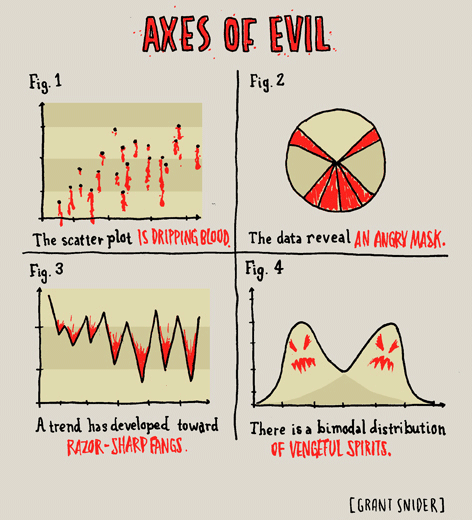
Statistics are like bikinis: what they reveal is suggestive, but what they conceal is vital - Aaron Levenstein
There’s a strange move I keep seeing in online arguments about thee major issues in my world - UK grooming gangs, trans access to women’s spaces, and immigration.
It goes like this:
Raise a concern about grooming gangs?
→ “Well, actually, on average, most sexual offences are committed by white British men.”
Ask questions about specific risks around trans access to women’s spaces?
→ “On average, most violence against women is from cis men, not trans people, so this is an unnecessary waste of concern.”
Point to patterns in crime or exploitation linked to migration in a particular context?
→ “Statistically, migrants commit fewer crimes in total than UK nationals, so your concern is irrelevant.”
On the surface, this sounds intelligent: “I’m the one talking about the data/facts; you’re just emotional/irrational.” And very quickly, the use of these national average stats is used to hit verbal nails into people with concerns, declaring them racist and transphobic.
But this kind of statistical sleight of hand is, at best, a basic failure to understand how data works and, at worst, a deliberate fog that denies reality and props up the indefensible. And yes—I’m fully aware of how statistics are weaponised to stoke anti-immigration fears.
To be clear: this post isn’t taking a position on immigration, gender ideology, or grooming gangs. My aim is far narrower—and aimed at something particular and pernicious that quietly corrodes all these important arguments: the habitual misuse of statistics in our public discourse. These issues I have used are simply some of the most vivid illustrations of the problem. But the same statistical error shows up everywhere—distorting political debate, muddying cultural conversations, and quietly sabotaging our moral reasoning.
This error is called the base rate fallacy — the fallacy of misapplied aggregation.
The Drunk-Driving and Clerical Abuse Test

The tyranny of the collective leads us to ignore extremal events. But extremal events often matter the most. - Nassim Nicholas Taleb
Imagine someone saying:
“Most car accidents are not caused by drunk drivers.
Therefore drunk driving isn’t a serious problem, and we shouldn’t focus on it.”
You’d recognise instantly how bad that argument is.
We know:
Yes, most accidents involve sober drivers.
And also drunk driving is a serious, distinct, and massively dangerous subset that deserves laws, campaigns, and targeted enforcement.
The fact that drunk drivers are a minority of all drivers does not mean we ignore the risk they pose.
We can hold two truths at once:
Most drivers aren’t drunk.
Drunk drivers are still a serious problem.
But when the topic is grooming gangs, gender, or immigration, that basic common sense disappears.
And imagine applying the same logic to clerical abuse: “Most young boys are abused by family members, not priests—so claims against priests don’t really matter.”
We now recognise that kind of reasoning for what it is: a grotesque misuse of aggregation that helped entire systems look the other way while children were harmed.
We learned—slowly and painfully—that aggregate data must never be used to dismiss abuse within a specific subgroup. Today, it’s culturally unthinkable to wave away accusations against priests or pastors with national averages. We know better.
And yet, for some reason, we’re willing to grant certain populations—whether ethnic groups or gender-identity categories—a similar shield of cultural protection.
The aggregate is invoked to smother the particular.
And it isn’t justified.
The Tyranny of the Mean
Beware of the single story that claims to explain everything. - Hans Rosling
Averages and aggregates are powerful tools. But they are clumsy.
An overall mean tells you something true about the population. It does not tell you everything you need to know about subgroups, patterns and mechanisms of harm.
You can say, “White men commit most sexual offences in the UK,”
and still need to ask, “What’s going on in these specific grooming networks in these specific towns?”
You can say, “Most violence against women comes from male partners and family members,”
and still need to ask, “What about this particular context — prisons, changing rooms, refuges — and how do we protect women there?”
You can say, “On average, migrants don’t offend more than natives,”
and still need to ask, “Are there specific cohorts, routes, or exploitation systems that need targeted attention?”
Using the big aggregate to dismiss the smaller pattern is just as irrational as pretending the smaller pattern is the whole picture.
In other words, it’s entirely possible to:
acknowledge who does most of the harm overall,
and take seriously where there are concentrated pockets of distinct harm.
Leaders must be able to do both. That’s what data/truth and care for people demand.
I’m exhausted by those who take one incident and falsely smear an entire people group with it. And I’m equally weary of the virtue-signalers who use national average statistics like a moral sledgehammer to shame anyone raising real, local concerns.
Why Do We Hide Behind the Mean?

The average is often the refuge of the politically frightened. - Nassim Nicholas Taleb
Because it’s emotionally and cognitively convenient.
Identity protection – If a specific problem feels like it will fuel “the other side,” we instinctively reach for statistics that make it go away.
Tribal fear – We’re terrified that acknowledging one problem (say, grooming gangs, or specific migration harms) will hand ammunition to racists, bigots or culture warriors.
Cognitive dissonance – It’s easier to silence a concern with a clever-sounding stat than to live with tension: “This problem is real, and it can be misused by people I disagree with.” Imagine how different our public life would be if we modelled the courage to hold that tension rather than flee from it.
Instead, we weaponise aggregates to police conversations and justify our cognitive bias:
“You’re talking about X pattern?
That’s statistically small compared to this big mean.
Therefore, you must be a racist/transphobe/bigot/fascist.”
And just like that, real victims vanish behind our need to win the argument, our tribal virtue-signalling, and—far too often—our sheer ignorance of the issues.
What Good Leadership Looks Like

If I look at the mass, I will never act. If I look at the one, I will - Mother Teresa
If you are a Christian leader in church, business, politics, or community, I believe we are called to resist this intellectual laziness. Good leadership does at least four things to resist the misuse of aggregates and related fallacies - four practices we can all undertake if we choose to:
Refuses to use the mean as a shield
You never dismiss a specific harm just because it doesn’t dominate the overall statistics.
You don’t say, “Most abuse looks like X, so we don’t need to talk about Y.”
Holds two truths together
“Yes, the majority pattern is here.”
“Yes, there is a meaningful, smaller pattern there that also needs honest attention.”
Names the fear openly
“We’re afraid that talking about this will be hijacked by extremists [insert the names of groups we fear and feel pressured to placate].”
Say it. Be courageous and name the fear. Don’t pretend the problem itself doesn’t exist.
Protects people, not narratives
The question is not, “Does this topic help or hurt my side?”
The question is, “Who is being harmed here, and what is a truthful, proportionate response?”
Misapplied aggregation isn’t just a statistical mistake — it’s a spiritual one. It’s what we do when we prefer the safety of our narrative over the uncomfortable, searching light of truth. It lets us hide real victims behind averages. It lets us feel righteous while avoiding repentance. It lets us win arguments without loving our neighbour.
But Christians are called to something better.
Statistics means never having to say you’re wrong. - Manfred Eigen
Jesus never dismissed the one suffering person because “most people aren’t like that.” He never hid behind the majority pattern to ignore a minority harm. He saw the one bleeding woman in the crowd, the one wounded man on the roadside, the one sheep that wandered. The kingdom is built on the truth that the one matters.