

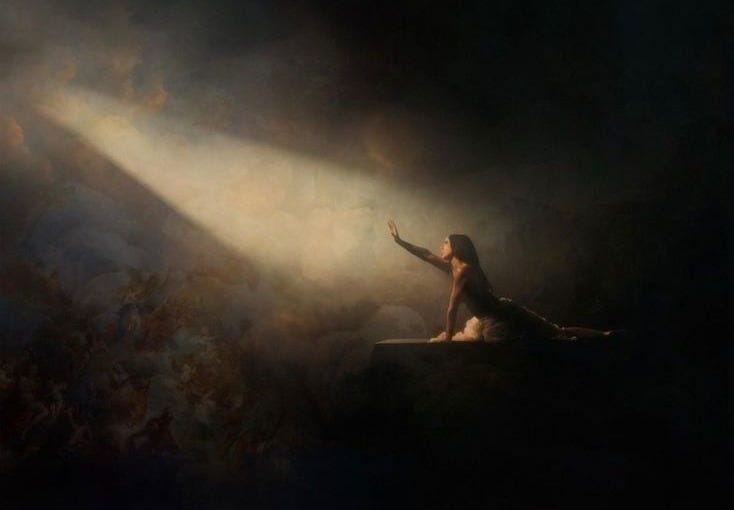
It is happening more and more.
You are in a conversation with someone you know. Someone intelligent. Someone you have disagreed with before, productively, without any major drama. But this time, something is different. You raise a question about what they said, and something suddenly changed behind their eyes. Not disagreement, but something faster than the speed of thought.
Their vocabulary shifts and slogans appear where their sentences used to be. They can’t define the terms they deploy or the ones you then ask them about. They cannot tolerate your good-faith questions. Any. Then they say they feel ‘unsafe’. They withdraw, attack, or sometimes, both.
You leave deeply unsettled and perturbed. Not because you lost a robust argument, but because you never got to have one. And the strangest part is that you remember when they were different, when the ability to disagree and learn from each other used to be possible.
This is our post-truth, post-science world marked by conspiracy thinking, psychological fragmentation, and something like a collective mood disorder. Yet what has captured us is not merely confusion or ideology. It is closer to a spiritual enthralment, a collective possession in which perception, reason, and the capacity for honest conversation have become captive.
What we are witnessing resembles a cultic fundamentalism: emotionally totalising, hostile to scrutiny, incapable of reasoned engagement, sustained by rituals of outrage, purity, and belonging. It functions less like rational conviction and more like therapeutic superstition. Feelings have become sacred, and disagreement becomes harm, while dissent is not something to answer to but is something to silence and extirpate.
We have well-worn vocabulary for this now. Polarisation. Radicalisation. Cognitive dissonance. Identity Politics. These words are clinically, psychologically, and sociologically accurate, as far as they go.
But they do not go far enough.
They describe symptoms without naming the real condition of things, of what passes between two people when a shared common reality has vanished. The deeper why of what is happening…
…We need different words and terms to name this emerging human experience, which is, in fact, not new but very ancient.
There is an older term for this condition.
Bewitched.1
We stopped using it because we thought ourselves too sophisticated for it. It is the word of fairy tales and superstition, cooky TV series and movies. But perhaps we abandoned its real meaning too quickly. Perhaps it survived as long as it did precisely because it names something psychologically and spiritually real that modern language keeps fumbling around to re-diagnose.
To be bewitched, in the old sense, was not simply to be wrong. It was to be enthralled. Where your perception has been captured. Your judgment clouded. Your imagination colonised. Your agency quietly dismantled. And the enchantment worked gradually, through suggestion and whispering and fear, until the bewitched person rarely knew it had happened.
That is what made it dangerous. That is what makes the word useful again now. To name this moment and the danger before us now.
Tolkien Saw It Coming
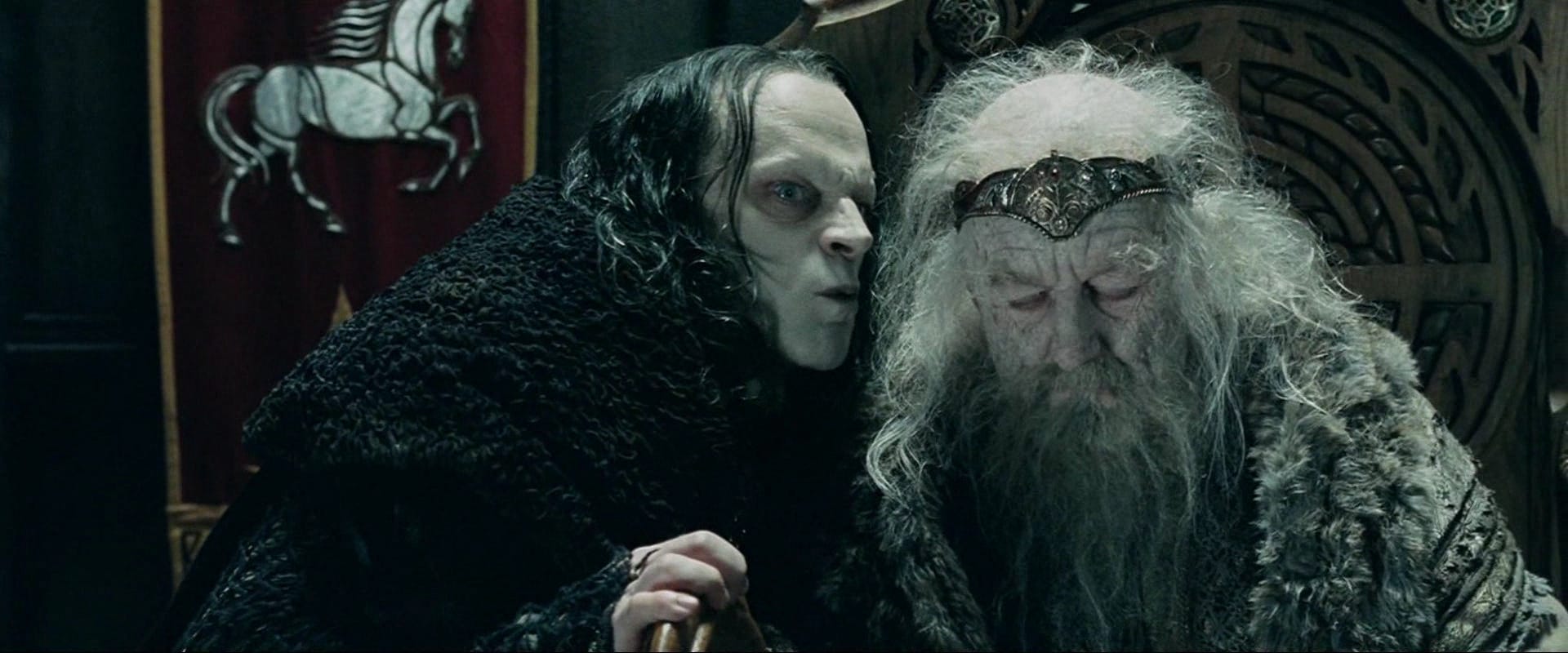
Tolkien understood this before most of us did.
When we first encounter King Théoden in The Lord of the Rings, he is not in chains. He is not imprisoned. He is bent. Passive. Spiritually depleted. Unable to perceive reality clearly, suspicious of the people trying to reach him, watching his kingdom deteriorate around him and finding himself incapable of an active and rational response.
Always beside him, close enough to whisper, stands Gríma Wormtongue.
Gríma never overpowers Théoden by force. Instead, he colonises his perception. He tells the king who to fear, who to distrust, why action is futile and why hope is naïve. He interprets every incoming piece of reality through a filter Théoden does not perceive. The king believes he is thinking. He is not thinking.
He is being thought through.
The judgments feel like his. The fears feel like his. But the source is somewhere else entirely.
This is a term to diagnose our age and moment. Because we live surrounded by digital Wormtongues.
The feed whispers. The algorithm whispers. The outrage cycle, the partisan commentator, the sociopathic online influence/commentator who has literally sold their soul for engagement, coupled with the carefully curated emotional atmosphere of whatever platform you last opened: all of it is whispering, minute by minute, hour after hour, month after month and now year after year, shaping what feels true before conscious thought can even begin.
The result is not merely bad opinions. It is something closer to what Théoden had. A pre-processed relationship to reality. People no longer evaluate information freely. They react to it, on cue, predictably, according to a script they did not write and cannot see.
Like Théoden we are being thought through by a source from somewhere else.
The spell speaks first. The person speaks second. And the person thinks they are thinking.
The Spell That Looks Like Enlightenment

We flatter ourselves that modern people are too rational to be bewitched. But modern enchantment is more sophisticated than the old kind, precisely because it never presents itself as enchantment. It presents itself as compassion. As justice. As safety. It offers identity and belonging and the solidarity of shared outrage, and because secular people no longer believe in spiritual enthralment, they have almost no defences against its psychological equivalent.
The enchantment works affectively. Identity becomes fused to ideology. Belonging becomes conditional on conformity. Dissent becomes psychologically costly and self policed. Then rationality eventually collapses completely.
This is why facts increasingly fail to convince or move the bewitched. The problem is not fundamentally intellectual. It is liturgical. People are being continuously formed by repeated rituals of emotional conditioning, doomscrolling, public shaming, and identity reinforcement. They are being catechised. The only question is who is doing the catechising and toward what end.
And so we arrive at what others have called epistemic fragility. The inability to encounter a genuinely hard question without something close to psychological collapse. When identity fuses with ideology, contradiction feels like self-annihilation. So instead of engaging with evidence, people protect themselves through fury, withdrawal or accusation.
“I feel unsafe in this conversation” functions not as an emotional statement but as an attempt to terminate reality-testing itself. The conversation must be stopped to protect the fragile self.
The spell of bewitchment protects itself. That is what spells do.
Dark Enchantment: This Is Not a Metaphor

Tolkien knew where the spell ultimately comes from, like the spells bewitching us today.
Behind Wormtongue stands Saruman. And behind Tolkien’s imagination stands the Christian account of evil itself.
Scripture does not describe Satan primarily as a brute-force destroyer. It describes him as a deceiver. The father of lies. The accuser. The whisperer. “Did God really say?” Notice this method. Reality is not denied outright at first; instead, it is subtly reframed. Trust is destabilised, perception distorted, and then identity collapses into confusion. The enemy works through suggestion, accusation, and the slow manufacture of deception.
This is why Christians should take bewitchment seriously. Not superstitiously, not in a way that becomes some Christian conspiracy theory, but in an apprehension of the supernatural at work. Human beings can become spiritually and psychologically enthralled by systems of lies repeated often enough and tied deeply enough to identity and belonging.
Bewitchment is not a metaphor for something else. It is a description of what is actually happening to people we know. And we are all in danger of falling under the spell ourselves.
The Practices of Disenthralment

The pivotal scene from Tolkien is not a debate or psychological intervention. Gandalf does not arrive with better counter-information and coping mechanisms. He does not engage Wormtongue’s arguments.
He breaks the enchantment.
He calls Théoden back into reality, into clarity, into courage, into memory, into himself and his true identity.
Tolkien makes something crucial clear. Théoden cannot recover while remaining immersed in Wormtongue’s presence. Disenthralment requires distance. Separation from the source of the enchantment.
That may be the most important thing to understand about our moment of bewitchment.
Many of us cannot think clearly because we never step outside the whispering. We are never not in the flow of the feed. Our emotional atmosphere is never not being curated around us and for us. What is needed to break free is not primarily a better argument.
It is disenthralment.
And for the Christian, that is a word with a long history of practice behind it. The liberation from bondage and servitude, to what holds someone in mental or physical subjection.
What are the spell-breaking practices of Christianity for disenthralment? If we wish to break from and stay free from bewitchment, what are our tools and practices to draw on as Christians have done for two thousand years?
Silence breaks the whispering in the ear, the eye, the heart, the soul, and the mind. Prayer reorients the self toward reality rather than toward the tribe. Deep reading of old books rebuilds attention that the algorithm has systematically destroyed. Letting scripture speak our sacred story and identity back to us. Actual embodied community - being in a room, and staying in the room with people who disagree, remains one of the few environments where genuine thought still has space to occur. These are not aesthetic choices. They are acts of epistemic resistance and spiritual warfare.
These practices are not new. They are not novel responses to a digital age. They are what the Church has always known to be necessary, precisely because the forces of enchantment have always been present. The question is simply whether we are engaging in them. Not theoretically. Actually. Because if we are not, something else is already forming us.
Breaking the Spell: Coming Back to Our Right Minds

Gandalf does not counsel Théoden from a safe distance. He stands in the room. He speaks with authority. He calls the king by name. And something in that naming, that direct address to the person still buried beneath the enchantment, begins to draw the poison out.
“I will draw you, Saruman, as poison is drawn from a wound.”
Théoden recovers not because he receives better information, but because someone refuses to stop believing the real person is still in there.
This is closer to what Jesus does.
The King Who Could Not Think Was Not the Only One
Bewitchment ultimately does not merely distort what a person thinks. It dismantles who a person is.
The symptom we should be paying attention to is not only the rage or the rigidity. It is the question underneath both. Who am I? The oldest poisoned wound. And the most exploited one. The systems of enchantment that surround us are built to keep that question open and dependent on their answer.
Identity then becomes a project with no completion. The self spirals inward, searching, finding only more mirrors, more tribes, more performance, more fear. Like with Théoden, the goal is not merely compliance. It is a total loss of self. A person so hollowed out that they no longer know what has been taken from them.
This is anti-creation. The father of lies not only deceives. He unmakes. He works against the grain of the one who spoke persons into being, who knit them together, who called them by name before they knew their own. Bewitchment is the unravelling of the soul from its source. The scattering of what God gathered. The silencing of the name that heaven knows.
Then there is Jesus.
The man in Mark 5 is living among the tombs. He cannot be restrained. He does not know who he is. When Jesus asks his name, the answer that comes back is not a name at all. Legion. Many.
A self so colonised it can no longer speak in the singular. There is no longer an I but a we and they.
Jesus does not engage the legion. He does not debate it or reason with it or attempt to understand its grievances. He addresses the person beneath it. And when the townspeople arrive, they find the man sitting, clothed, in his right mind.
That phrase is worth pausing over. His right mind. Not a new mind. Not a reconstructed identity or a therapeutic breakthrough. His own mind returned to him. The self that was always there, beneath what had taken hold of him.
This is the opposite of bewitchment. Bewitchment multiplies and scatters. It replaces our name and identity with the noise. It answers the question who am I with an endless, restless, borrowed legion of answers that never settle and never satisfy. What Jesus does is the inverse. He is the Lord of creation, moving against anti-creation with recreation. He silences the legion and speaks to the person. He restores the singular. He gives the man back to himself.
Speak to the Person. Not to What Has Hold of Them.
Leaders in this moment will need psychology. They will need to understand identity collapse, the sociology of capture, and the patient work of human care. None of that should be dismissed, for it is vital. But there are people in our communities who are not merely confused, wounded, or politically lost. T
They are bewitched.
Wearing an identity assembled by forces that do not love them. Unable to find their way back to themselves. Formed not into the image of the one who made them but into the image of whatever ideology has captured them. Deformed. Their self is not lost but overwritten, occupied, turned against its own deepest nature.
And this is where it all becomes urgent for us. Because the bewitched do not stay still. They speak. They recruit. They carry the enchantment into rooms and relationships and institutions, whispering what was whispered to them, passing on the distortion as though it were revelation. The captive becomes the captor.
The enthralled become the enthralling.
What was done to them, they now do to others, and they experience it not as harm but as love, not as conquest but as liberation. This is how enchantments spread. Not by force. By contagion. One Wormtongue becomes many. One captured imagination seeds others. And the circle of those who can no longer find their way back to themselves quietly, steadily grows.
Until someone stands in the room and refuses to pretend this is normal. Until someone looks past what holds them and speaks to the person beneath.
The spell insists that the person is gone. It is lying. That is what spells do.
Speak to who people are. Not to what has hold of them. We have to learn to speak to the person beneath the bewitching.
Not to the legion. Not to the ideology. The enchantment is too strong for that. To engage it on its own terms is to lose before you begin. And not to the performance of the captured person, the outragfe and offence, not in condemnation of what they have become or what they are saying or what they have done in the grip of what has hold of them.
But in love. In forgiveness. In the stubborn clarity of faith that sees past the distortion to who this person was always meant to be. The image of God, still present, still buried in there, and worth speaking to. To learn to speak to the person beneath the bewitching.
To look past what has hold of them, and say it plainly.
I see you. I know your true name. Come forth!
A like tells me it helped you and landed well. A comment means we get to think about this together. And a share means the conversation gets wider, and a chance to break the spells of bewitchment.
This article began with a conversation with my friend Loren Kerns, who suggested that the word bewitched might offer Christians a way to map the sociological and psychological forces at work in our cultural moment. His suggestion lodged in my mind like a splinter. I could not leave it alone until I had thought it through and written it out here.
Read the book ‘Babylon and You’ by James Gardner which parallels your concept of bewitchment with a spirit of sorcery (same thing) which is at work. In the West we don’t recognise it, it is an alien concept to us.