

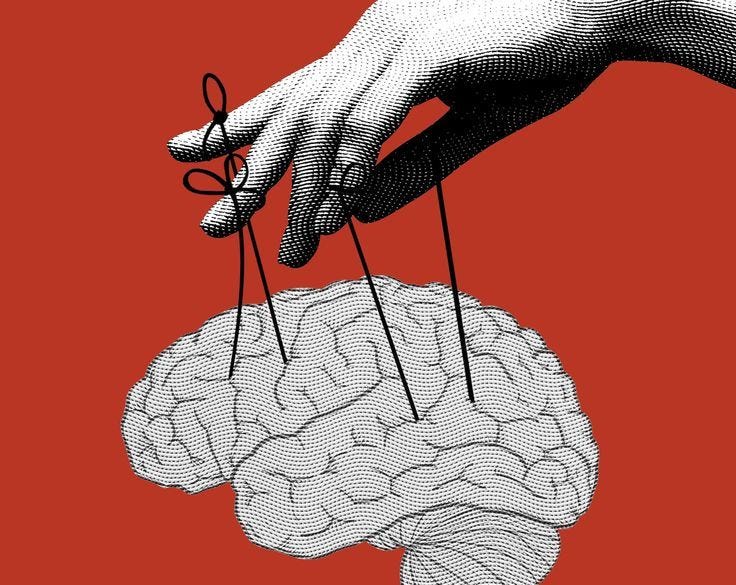
A Gen Z Substack writer recently announced that she had just realised the importance of critical thinking. This, she declared, was her breakthrough moment.
Given the current alarming decline in critical thinking, I was drawn in—hopeful that a countercultural recovery movement might begin with her post.
What followed was over 1,500 words of unexamined assumptions, borrowed phrases, algorithm-approved moral signals, and precisely zero evidence that she had actually done any critical thinking at all. Ever. Yet the comments lauded the author for making a huge, much-needed breakthrough for their generation.
It was strangely perfect.
Because we now live in a moment when talking about thinking is often mistaken for thinking itself. And that confusion is everywhere about everything.
Illusions: When Talking Replaces Doing
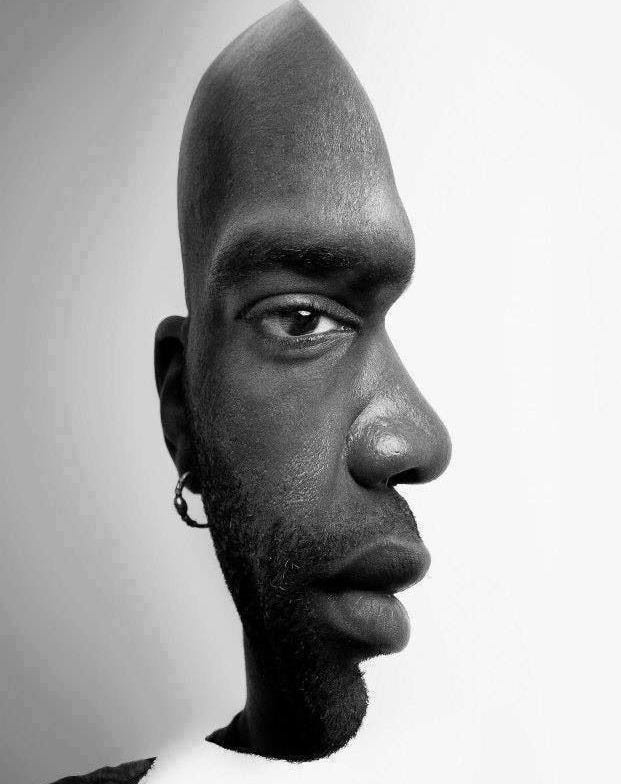
We have drifted into a world where naming something feels equivalent to actually doing it. We speak about justice, leadership, courage, deconstruction and “doing the work”. And somehow, the vocabulary, just saying the words, becomes a substitute for the actual thing itself.
Psychologically, the reason for this faulty process is disarmingly simple. Speaking feels like doing. When we articulate a value, commit to a principle, or declare an intention, our brains release a small hit of satisfaction—the same neurochemical reward we’d get from actual accomplishment. We announce our gym membership and feel virtuous without ever stepping on a treadmill. We post about critical thinking and present ourselves as intellectually rigorous, yet we never engage in any actual critical thinking.
Language now creates the illusion of action. In our current ecosystem of performative social media, the illusion has become more valuable than the reality. Identity signalling replaces genuine intellectual formation, and performance is mistaken for substance. But there is a deeper problem: critical thinking itself has been reframed as suspect. Even when we want to practise it, we have been subtly disabled and trained away from it.
Circular Thinking and Epistemic Closure

Universities, once the foremost places for teaching and practising critical thinking, have increasingly become incubators of ideological capture—and worse, sites of intellectual lobotomising that actively disable the very capacity they were meant to cultivate. They increasingly reward fluency in approved language over any rigorous argument. Schools teach students what to think about, not how to think.
Here is a recent example that reveals the poverty of critical thinking within a university: the near-total ideological capture of thought, and the deeper problem it creates—the impossibility of thinking itself when circular reasoning, embedded within modern ideologies, is institutionalised and endlessly reinforced by the university.
When people are trained—subtly or overtly—to distrust independent evidence, or simply lose the habit of seeking it, they enter a kind of epistemic closure. At that point, reality is no longer something to be examined but something to be defended. Truth becomes secondary to their emotional allegiance. Their denial hardens into a kind of denialism, where any evidence is immediately dismissed, distorted, or attacked—not because it has been carefully evaluated, but because it threatens the existing position people hold. Reason itself becomes compromised, and displaced by emotional certainty.
Beliefs fuse with identity, so that admitting error feels less like intellectual growth - and intellectual growth is no longer a desired pursuit - and more like the personal collapse of identity and being. This whole process activates powerful defensive instincts that kick in to defend the self by preserving beliefs no matter how false they are.
And we now have whole ecosystems designed to perfect this where critical thinking does not simply atrophy. It becomes dangerous. Because real thinking always carries the risk of discovering you were wrong. And when belief is fused with identity, being wrong no longer feels like learning. It feels like losing yourself.
Over time, this also reshapes a persons moral perception. Those who disagree are no longer seen simply as mistaken, but as suspect or even less than human. We see this in the extreme name calling of people to denigrate and describe their inhumanity. It explains how everyone who disagrees with someone is now is a right wing, nazi facist or similar.
Neurologically, the brain filters out opposing arguments altogether, making genuine engagement increasingly difficult. People retreat into echo chambers that reinforce what they already believe and inoculate them against any correction. The result is not merely disagreement, but the formation of a post-truth consciousness—where certainty replaces truth, emotional resolution of cognitive dissonance replaces rational coherence, and meaningful dialogue becomes practically impossible.
What We Lose When Critical Thinking Dies
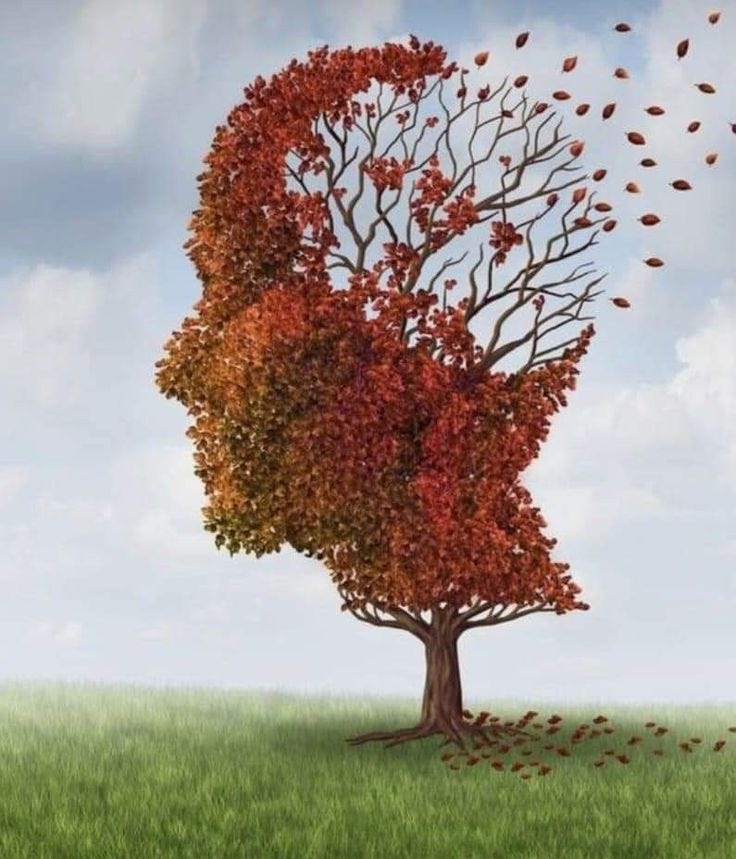
Tragically as critically thinking atrophies, major pathologies manifest in society and culture.
We become easier to control. Whether by governments, corporations, algorithms, or activists, people who can’t think critically are people who can be led by their noses. They’ll believe whatever confirms their existing biases, reject whatever challenges them, and never notice they’re doing it.
We fragment into warring tribes. Without the ability to evaluate evidence, adjudicate between competing claims, or even agree on what constitutes a good argument, we retreat into ideological bunkers. Everyone becomes partisan, and truth becomes whatever your side says it is.
We lose the capacity for self-correction. Individuals and societies only improve when they can recognise their mistakes. Critical thinking is the immune system of the mind—it identifies errors, fights off bad ideas, and keeps the organism healthy. Without it, we’re defenseless against our own stupidity and ignorance.
We stop being able to solve actual problems. The world is complex. Climate change, economic inequality, mental health crises, geopolitical instability—none of these yield to slogans or wishful thinking. They require clear-minded analysis, uncomfortable trade-offs, and the humility to admit when our first answer was wrong.
We need critical thinking not because it makes us sound smart in social interactions or on tick-tock videos but because reality doesn’t care about our feelings.
What Critical Thinking Actually Is (And How to Reclaim It)
So what is critical thinking? It’s simpler than we might think—and harder than we’d like.
Critical thinking is the practice of questioning your own beliefs as rigorously as you question others’. It’s intellectual honesty. It’s the willingness to say “I don’t know” and to mean it. It’s the discipline, the practice of asking “What would change my mind?” and then genuinely looking for answers. And it has to start with even wanting that in the first place and to know why thinking better is vital for your well being and others.
Here’s some basics on how to recover it for yourself:
1. Steelman, don’t strawman. Before you dismiss an argument, make the strongest possible version of it. If you can’t articulate your opponent’s position in a way they’d recognise, you don’t understand it well enough to reject it. Can you imagine how just this practice would revolutionise our world?
2. Seek out disconfirming evidence. Don’t just Google things that prove you right. Actively hunt for information that challenges your beliefs. Read the best version of the other side’s argument, not the worst.
3. Distinguish between what you believe and what you can demonstrate. You’re entitled to your beliefs. You’re not entitled to present them as facts unless you can back them up. Learn to say: “I believe X, but I could be wrong” or “The evidence suggests Y, but it’s not conclusive.”
4. Practice intellectual humility. The smartest people in history got massive things wrong. So will you. So will I. That’s not a reason to stop thinking; it’s a reason to think more carefully. If you find yourself consumed by anger and offence with your instinct to existentially scream at someone as your sole response to their beliefs you are probably suffering epistemic closure and ideological imprisonment. Notice it and in others.
5. Engage with people who disagree with you—charitably and kindly. Not to win debates, but to test your ideas. Iron sharpens iron, but only if you’re both sharpening.
Why does recovering critical thinking matter personally? Because you can’t navigate a complex world with a simplistic mind. You’ll get exploited, manipulated, and led astray. More importantly, you’ll never grow.
Intellectual cowardice keeps us so very small.
The Gift of Critical Thinking to Others

But here’s the real reason to care about this: critical thinking isn’t just for you.
When you think critically, you make everyone around you better. You model intellectual courage. You demonstrate that it’s possible to disagree without demonising. You show that changing your mind isn’t weakness—it’s strength. And universities that used to embody this, have becomes places that do the complete opposite.
You become someone others can trust, because you’ve shown you care more about truth than about being right. In a world drowning in bad-faith actors and tribal loyalties, this becomes a gift to others.
You can also create space for honest conversation. When people know you won’t punish them for doubt or curiosity, they’ll bring their real questions to you. And those conversations—the ones where people are actually thinking, not just performing—are where real change happens. It is possible to discover the power and pleasure of critical thinking. And you can be the door out of ideological fundamentalism that others are trapped in.
Critical thinking is contagious. But so is its absence. We get to choose which virus we want to spread.
Why Christians, of All People, Should Champion Critical Thinking
The properly Christian training of the mind is not a training in ‘religious’ subjects, but a training in how to think. C.S. Lewis
Finally, a word to Christians: We need to recover critical thinking not despite our faith, but because of it.
Christianity has always been, at its core, a truth-seeking faith. That said, there have been—and still are—forms of Christianity that resist critical thinking. Both these expressions, and modern secular ideological bubbles, rely on self-reinforcing environments that shield individuals from dissenting views.
The key difference between the Christian and secular versions lies in the ultimate anchor for their reasoning—but that is beyond the scope of this article. What matters here is that today’s post-truth epistemic closure and anti-rational thinking function, in many respects, like a form of fundamentalism. Increasingly, people are becoming fundamentalists—of whatever ideology they have adopted or been absorbed into.
But Christianity in its more major forms, did not merely tolerate critical thinking; it helped create the intellectual conditions that made systematic critical thinking possible. This happened through deeply interwoven theological, institutional, and cultural developments.
Christianity did not invent human rationality, but it did provide powerful plausibility structures—social, institutional, and moral frameworks—that reinforced the value of truth-seeking, intellectual humility, and rational accountability. These structures helped sustain habits of critical thinking across generations.
Critical thinking does not survive on technique alone. It depends on deeper cultural and moral commitments—especially the belief that truth exists, that it is worth pursuing, and that one’s identity can survive being wrong.
Christianity provided one of the most historically powerful frameworks for sustaining those commitments. When that framework weakens, as it has exponentially, critical thinking does not automatically disappear—but it becomes more fragile, and harder to sustain at a societal level. Which is what we have arrived at today.
This helps explain why societies can retain the language of critical thinking, the suggestion of it while gradually losing its actual practice.
“You will know the truth, and the truth will set you free” (John 8:32). The Apostle Paul told the Thessalonians to “test everything; hold fast what is good” (1 Thessalonians 5:21). The Bereans were commended for examining the Scriptures daily to see if what Paul taught was true (Acts 17:11). Faith is not the absence of questioning—it’s the commitment to keep questioning until you find answers that are real.
The greatest Christian thinkers—Augustine, Aquinas, C.S. Lewis, Dorothy Sayers, Francis Schaeffer—were all rigorous critical thinkers. They didn’t fear reason; they wielded it in service of truth. They knew that a God who is Truth Himself has nothing to fear from honest inquiry.
Too often, modern Christianity has retreated into anti-intellectualism, as if thinking hard is a threat to faith. But the opposite is true. Lazy thinking leads to shallow faith—the kind that collapses the moment it meets a challenge. Critical thinking forged in the fires of real engagement creates a faith that lasts and bears testimony to reality.
Moreover, we worship a God who became incarnate—who entered into reality, into flesh and blood and history. Christianity is not a gnostic escape from the material world; it’s a full affirmation that the world is real, that truth is knowable, and that we are called to seek it with all our heart, soul, and mind (Matthew 22:37).
Critical thinking, rightly understood, is not rebellion. It is worship.
The world doesn’t need more Christians who can repeat talking points. It needs Christians who can and are willing to think—who can engage culture, answer hard questions, and give a reason for the hope within them (1 Peter 3:15). And that requires the courage to think critically.
And that would be a revival our world desperately needs.
Great post, Jason. Thank you for always inspiring (and encouraging) me to think more critically - especially over a recent lecture we were both in attendance for 😆
Jase- To quote a good friend "Brilliant!!" Also this seems to me to be one of several key insights you surface in this incisive piece "admitting error feels less like intellectual growth - and intellectual growth is no longer a desired pursuit - and more like the personal collapse of identity and being." After convening hundreds of 3 Practice Circles where I've observed people struggle to admit they're wrong (and have struggled with it myself) - it does seem that it is connected to a kind of desperation - something visceral - I scurry around seeking intellectual cover or excuses where I can hopefully divert my ideological opposites attention. It all feels so immensely personal. Which is why we need places to "practice" saying "I might be wrong" We need to hear those words come out of our own mouths and realize that we didn't die having made that admission. That experience gives us intellectual ground to stand on so the next time we are tempted to divert or deny we find a way to say out loud - I might be wrong